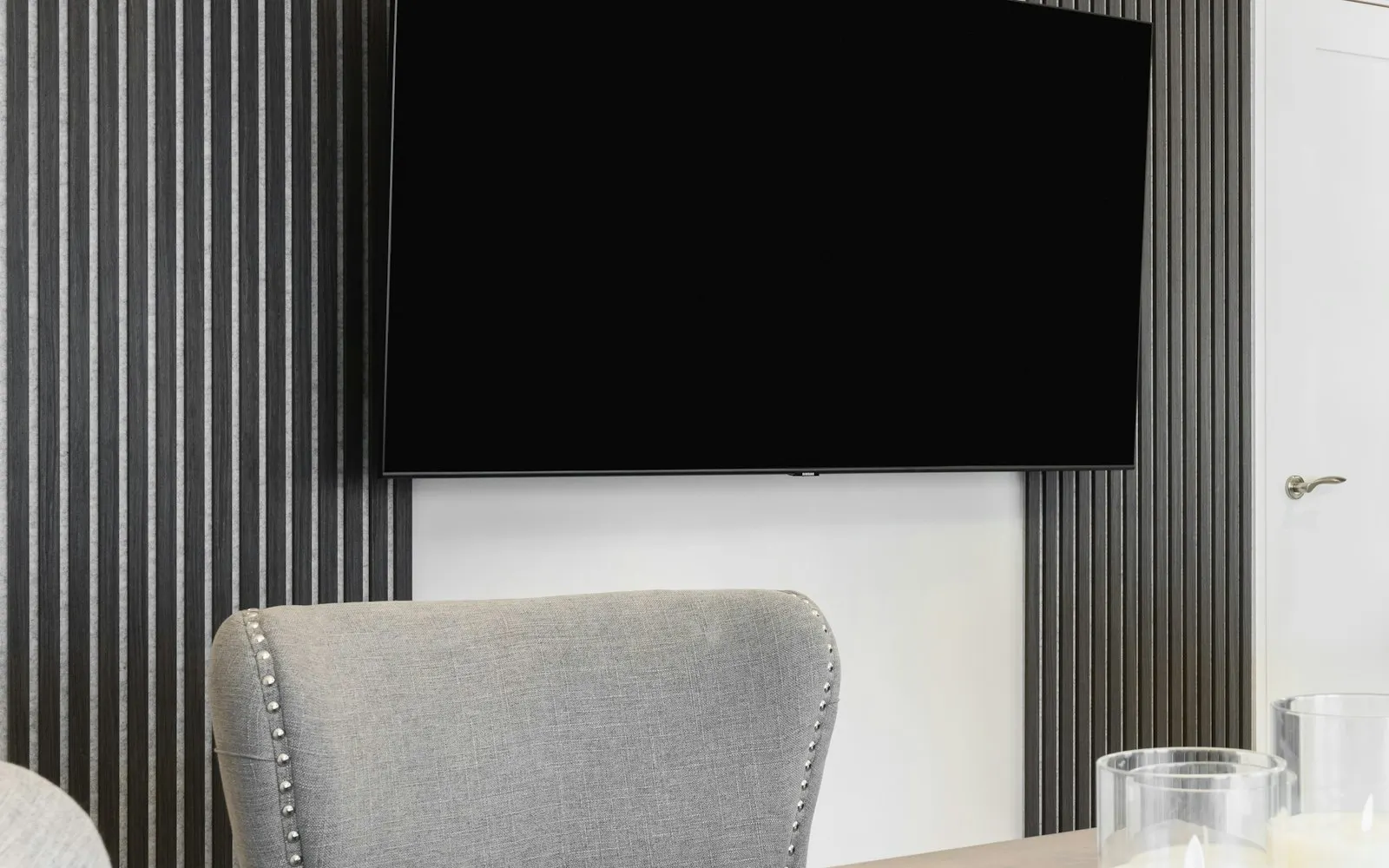
A wall-mounted TV frees up floor space, keeps the screen out of reach of small hands, and makes a living room look cleaner and more modern. It also puts a large, expensive and surprisingly heavy object on a wall above where people sit, so it has to be done properly. TV wall mounting is one of the most requested jobs in Dandenong and the surrounding suburbs, and it is a job where the details matter: the right bracket, the right fixings for the wall, the right height and a level screen with the cables out of sight as far as practical.
We mount TVs of all sizes on plasterboard, brick, block and concrete walls, in homes, rentals, offices, shops and community spaces.
What is included
- Help choosing the right bracket for your TV and room, or fitting the bracket you already have
- Locating studs, and checking for hidden cables and pipes before drilling
- Fixing the bracket with fixings rated for the TV’s weight and the wall type
- Mounting the TV at a comfortable viewing height and checking it is level
- Tidying cables with a cable cover or concealment where suitable
- Mounting soundbars, set-top boxes and media devices
- Removing old brackets and patching the holes
- Setting the TV back up and checking it powers on with inputs connected
Choosing the right bracket
Fixed (flat) brackets
Fixed brackets hold the TV close to the wall, giving the slimmest, neatest look. They suit rooms where the seating faces the TV directly and there is no glare from windows. They are the simplest and generally the most secure option.
Tilting brackets
Tilting brackets let the screen angle down a few degrees. They are useful when the TV is mounted higher than eye level, such as above a fireplace or a sideboard, and help reduce reflections from windows and lights.
Full-motion (articulating) brackets
Full-motion brackets let the TV extend out from the wall and swivel left or right. They are ideal for open-plan living areas, corner positions, or rooms where you watch from more than one spot, such as from the kitchen and the lounge. Because the TV extends out on an arm, the leverage on the wall fixings is much higher, so full-motion brackets need to be fixed into studs or masonry, never just plasterboard.
Compatibility
Every TV has a VESA mounting pattern, the spacing of the threaded holes on its back, and a weight. The bracket must suit both. We check the VESA pattern, weight and screen size before mounting, and make sure the bracket’s rated capacity comfortably exceeds the TV’s weight.
Wall types and fixings
Plasterboard over timber studs
Most internal walls in local homes are plasterboard on timber studs, usually spaced 450 or 600 millimetres apart. The strongest fixing is into the studs themselves with heavy-duty screws or coach screws. We use a stud finder and confirm stud positions before drilling. Where studs do not line up with where the TV needs to go, a bracket with a wide wall plate or a timber backing board fixed across two studs solves the problem.
Plasterboard over steel studs
Some newer homes, apartments and commercial fit-outs use steel studs. These need different fixings, such as toggle bolts designed for steel, and we check what is behind the wall before choosing.
Brick and block
Double brick homes, common among older homes in Dandenong and Doveton, and brick feature walls need masonry anchors. We drill into the brick itself rather than the mortar joints where possible, and use anchors suited to the load. Rendered brick needs care to avoid cracking the render.
Concrete
Concrete walls in units, townhouses and commercial buildings take masonry anchors or chemical anchors for very heavy loads. We use a hammer drill and check for reinforcing steel and embedded services.
Plasterboard only
Small, light TVs on fixed brackets can sometimes be safely mounted on plasterboard alone using heavy-duty plasterboard anchors rated for the load. We do not mount large TVs, or any full-motion bracket, on plasterboard alone.
Getting the height right
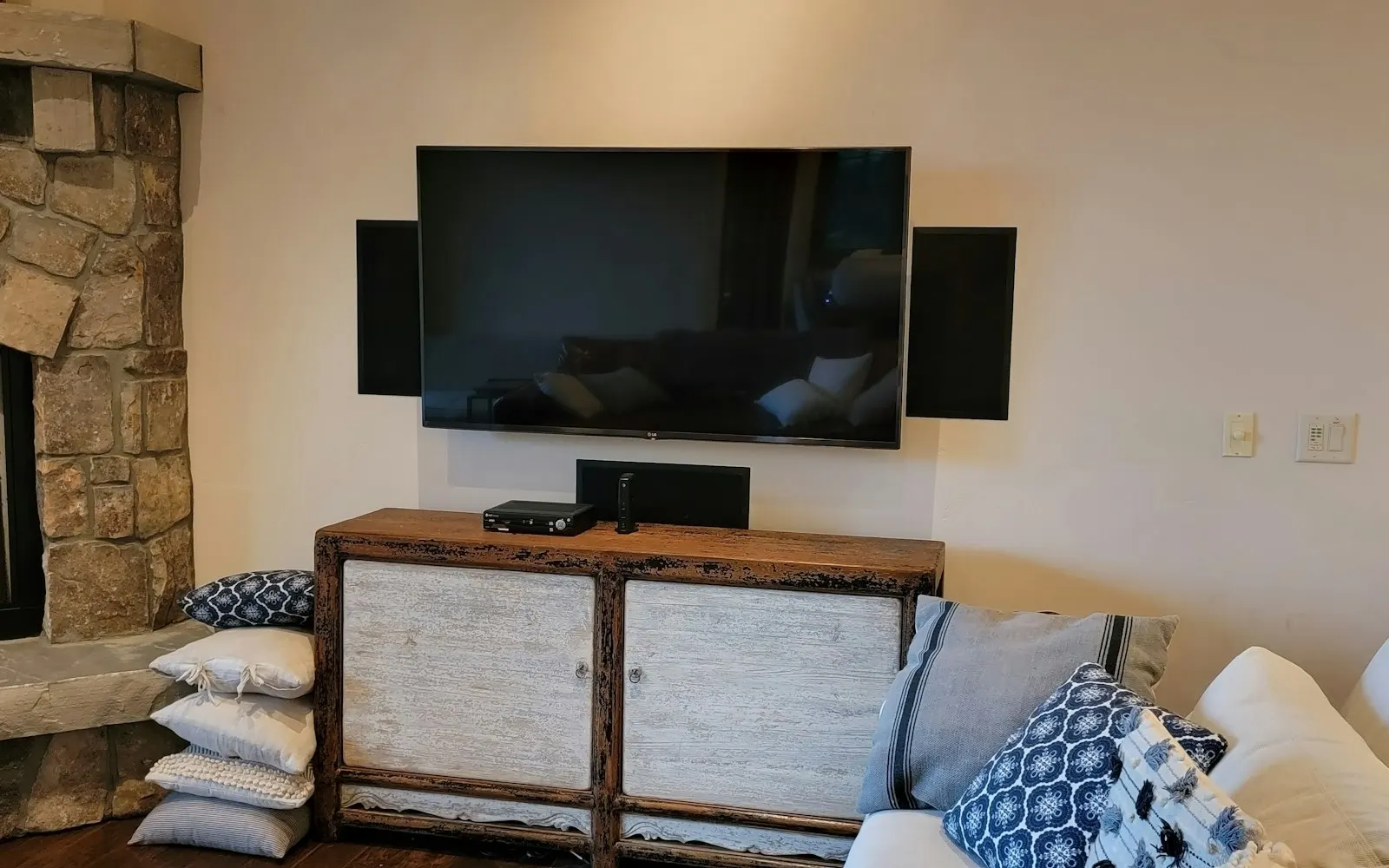
The most common TV mounting mistake is hanging it too high. A comfortable viewing position puts the centre of the screen roughly at eye level when you are seated, which for most couches is around a metre to 1.2 metres from the floor, depending on the TV size and seating. Mounting much higher strains the neck over time. Above a fireplace, a tilting bracket helps. In bedrooms, a slightly higher position can suit viewing from bed. We help you choose the right height before drilling, often by holding a template or the empty bracket on the wall so you can see it from your seat.
Hiding cables
Loose cables dangling below a wall-mounted TV spoil the clean look. Options include:
- Paintable cable covers fixed to the wall surface, which are tidy, quick and suitable for brick, concrete and rentals
- Routing cables down behind a TV unit or sideboard placed below
- In-wall cable concealment through plasterboard walls, using in-wall rated cables and a recessed wall plate, where there are no noggings or insulation in the way
Power points
If you want a new power point behind the TV so there is no visible power cable, that work must be done by a licensed electrician in Victoria. We do not do electrical work. We can arrange the mounting around the electrician’s work, or mount first and leave a neat path for the electrician to follow.
TV mounting in rentals
Renters in Victoria may need the landlord’s consent to mount a TV, as it involves drilling into the wall. Landlords cannot unreasonably refuse consent for some modifications, and many agree once they know the job will be done properly and the holes patched at the end of the lease. We can provide a written description of the work for your request. When you move out, we can remove the bracket and patch and paint the holes. Our end-of-lease repairs page explains more.
Soundbars, speakers and devices
We mount soundbars directly below the TV using soundbar brackets, fit small shelves for set-top boxes and gaming consoles, and mount speakers on walls for surround sound. Devices can also be hidden behind the TV on small adhesive or screw-fixed mounts, keeping the wall clear.
Commercial mounting
Businesses, clinics, gyms, cafes and offices across Dandenong South, Springvale and the wider area use us to mount display screens and TVs for menus, presentations, waiting rooms and staff areas. Commercial walls are often steel stud or concrete, and we choose fixings to suit. See our commercial handyman page.
Safety and tip-over
Televisions sitting on furniture can tip over if pulled or climbed on, which is a well-documented hazard for young children. Wall mounting eliminates this risk when done correctly. If you prefer to keep a TV on a stand or unit, we can fit an anti-tip strap to the wall, and anchor the unit too.
Choosing the right wall and position
Glare and light
Before choosing a wall, look at where the windows are. A TV directly opposite a large west-facing window will be washed out by afternoon sun in summer. A wall at right angles to the windows usually gives the best picture. If there is no choice, a tilting bracket, blinds or sheer curtains reduce glare.
Viewing distance
As a rough guide, many people find a comfortable viewing distance to be around one and a half to two and a half times the screen’s diagonal size, with 4K screens comfortable at the closer end. A very large TV in a small room can feel overwhelming, while a small screen across a large open-plan space can be hard to see.
Above a fireplace or heater
Mounting above a fireplace is popular, but heat rising from a wood heater or gas log fire can damage electronics, and the higher position strains the neck. Check the TV and heater manufacturers’ clearances. If you go ahead, a tilting or pull-down bracket helps viewing.
Corners
Corner mounting suits rooms with seating on two sides. A full-motion bracket with a corner mounting plate, fixed into studs on both walls, lets the TV sit neatly across the corner.
Room for the rest
Think about what sits below the TV: a low unit for devices, a soundbar, speakers or just a clear wall. We position the bracket so everything lines up and cables can run neatly down to the unit.
Mounting very large TVs
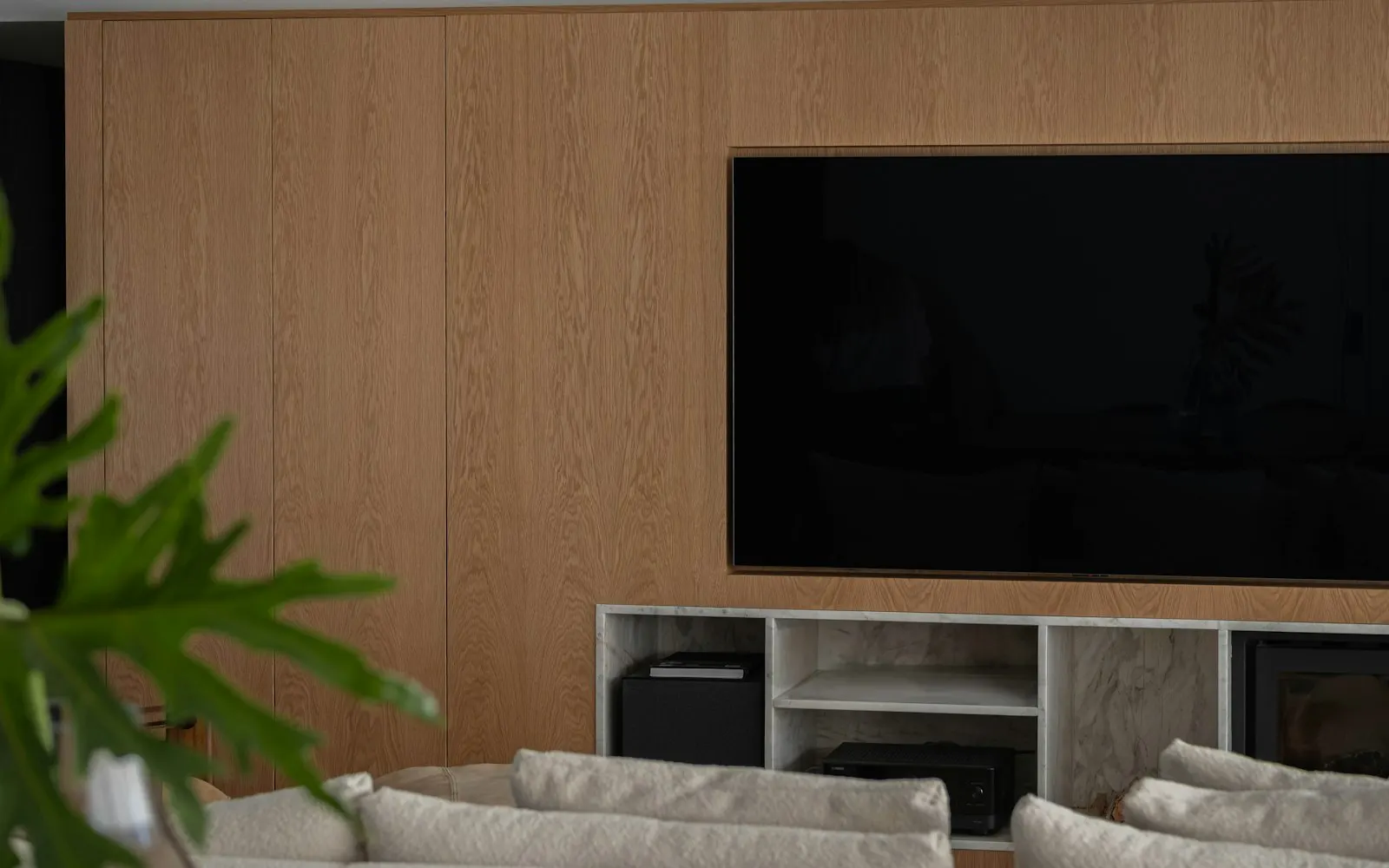
TVs of 75 inches and above are heavy and awkward to lift onto a bracket. We mount them with two people where needed, and on brackets rated well above the TV’s weight. The wall fixings take on extra importance with large screens, particularly on full-motion arms.
What to have ready on the day
Have the TV unboxed if possible, along with its screws and spacers, any bracket you have bought, and the remote controls. Clear the area around the wall and decide on the height. If an electrician is adding a power point, it is best done before we arrive.
Moving or upgrading a TV
Upgrading to a bigger screen often means the old bracket is no longer suitable. We remove it, patch the holes, and fit a new bracket rated for the new TV, sometimes in the same position, sometimes higher or wider to suit. When moving house, we can take TVs down and remount them in the new home.
Areas we cover
We mount TVs across our service areas, including Dandenong, Springvale, Endeavour Hills and Keysborough.
Related services
TV mounting often goes with picture and shelf hanging, flat-pack assembly for TV units, and plaster and wall patching when an old bracket comes down.
Frequently asked questions
Can you mount a TV on plasterboard?
Yes, by fixing into the timber studs behind the plasterboard, or using a backing board across studs. Small, light TVs on fixed brackets can sometimes use rated plasterboard anchors. Large TVs and full-motion brackets always go into studs or masonry.
Do you supply the bracket?
We can supply a suitable bracket, or fit one you have already bought, after checking it suits your TV’s VESA pattern and weight.
Can you hide the cables in the wall?
In many plasterboard walls, yes, using in-wall rated cables and recessed plates. On brick or concrete walls, a paintable surface cable cover is the neatest option.
Can you add a power point behind the TV?
New power points must be installed by a licensed electrician. We do not do electrical work but can coordinate the mounting around it.
How high should my TV be?
Generally, the centre of the screen should be close to seated eye level, around a metre to 1.2 metres from the floor. We help you choose before drilling.
Can you remove an old bracket and patch the wall?
Yes, we remove old brackets, fill and sand the holes, and prime and paint the patch.
Get a free quote
Send us your list of jobs, your suburb and a few photos. We will reply with a clear written scope and a free, no-obligation quote.
Get a free quote