Falls are one of the leading causes of injury for older Australians, and many happen at home: getting in and out of the shower, standing up from the toilet, stepping down from the back door, or walking down a dark hallway at night. A grab rail in the right place, fixed solidly into the wall, can make the difference between someone staying safely and independently in their home and a trip to hospital. We install grab rails, handrails and small home safety modifications for older people, people with disability, people recovering from surgery and their families across Dandenong and the surrounding suburbs.
The City of Greater Dandenong and the neighbouring City of Casey have many long-term residents who have lived in the same home for decades and want to keep living there, as well as multigenerational households caring for parents and grandparents. We often work alongside occupational therapists, home care providers and families to make homes safer.
What we install
- Grab rails beside toilets, in showers and next to baths
- Fold-down (hinged) grab rails beside toilets
- Shower rails and vertical support rails
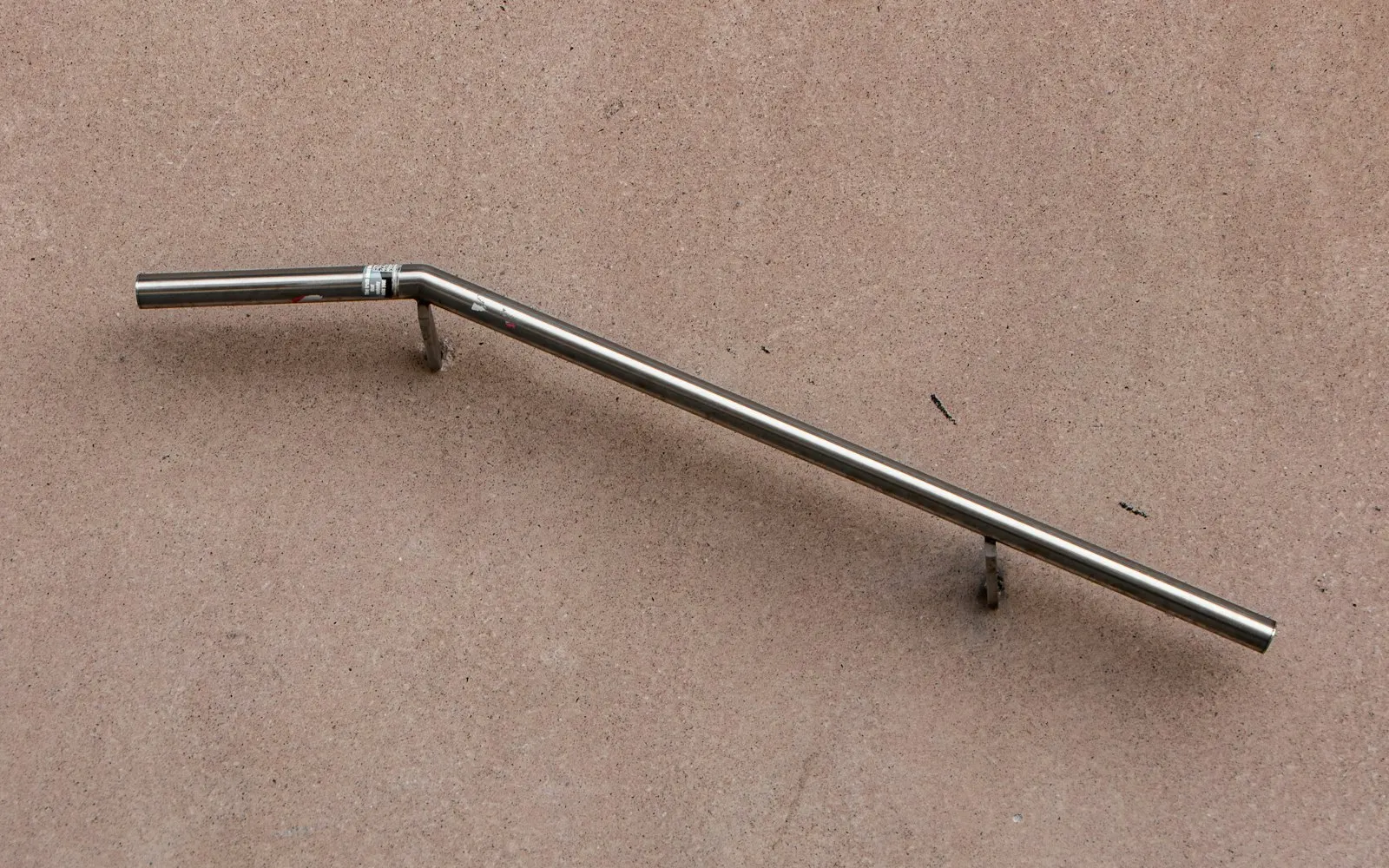
- Handrails along hallways, steps and stairs
- External handrails on front and back steps, porches and paths
- Rails beside beds and at doorways where support is needed
- Shower seats (wall-mounted fold-down seats), where the wall allows
- Small threshold ramps and level transition strips at doorways
- Lever door handles to replace round knobs that are hard to grip
- Non-slip treatments and stair nosings
- Hand-held shower brackets and rail-mounted shower holders (non-plumbing)
- Raised toilet seats and toilet frames (supplied by you or your provider)
- Night lights (plug-in or battery) along paths to the bathroom
Why proper fixing matters
A grab rail must take the full weight of a person who suddenly slips, pulls or leans heavily. Australian Standard AS 1428.1, which covers accessible design, includes strength requirements for grab rails in accessible facilities, and while it is formally required mainly for public and commercial buildings, it is a sensible benchmark for homes too. In practice, a rail must be fixed into solid structure: timber studs, noggings, brick or concrete. Plasterboard anchors alone are not adequate. Suction-cup rails sold online can come loose without warning and are not suitable as a primary support.
Fixing into different walls
- Plasterboard over studs: rails are fixed into the studs. If studs are not where the rail needs to be, we can fit a backing plate spanning the studs, or use specialist anchors rated for grab rails where suitable.
- Brick and concrete: heavy-duty masonry anchors into solid brick or concrete.
- Tiled walls: we drill carefully through tiles with tile-specific bits, then into the structure behind, and seal every penetration so water cannot track into the wall.
Testing
After installation, we test each rail with firm pressure in multiple directions to confirm it is solid.
Rail placement
The right position depends on the person, their height, how they move, which side they are stronger on, and the layout of the room. General guidance from accessibility standards suggests horizontal rails beside toilets at around 800 to 810 millimetres above the floor, but home installations should be tailored to the individual. An occupational therapist can assess and specify the exact type and position of rails, which we then install as specified. Without an OT report, we discuss how the person uses the space, and position rails accordingly.
Bathroom and toilet
The toilet and shower are the highest-risk areas. Typical rail positions include a horizontal or angled rail on the side wall beside the toilet, a fold-down rail on the open side where there is no wall, a vertical rail at the shower entry to hold while stepping in, and a horizontal rail inside the shower along the long wall.
Steps and stairs
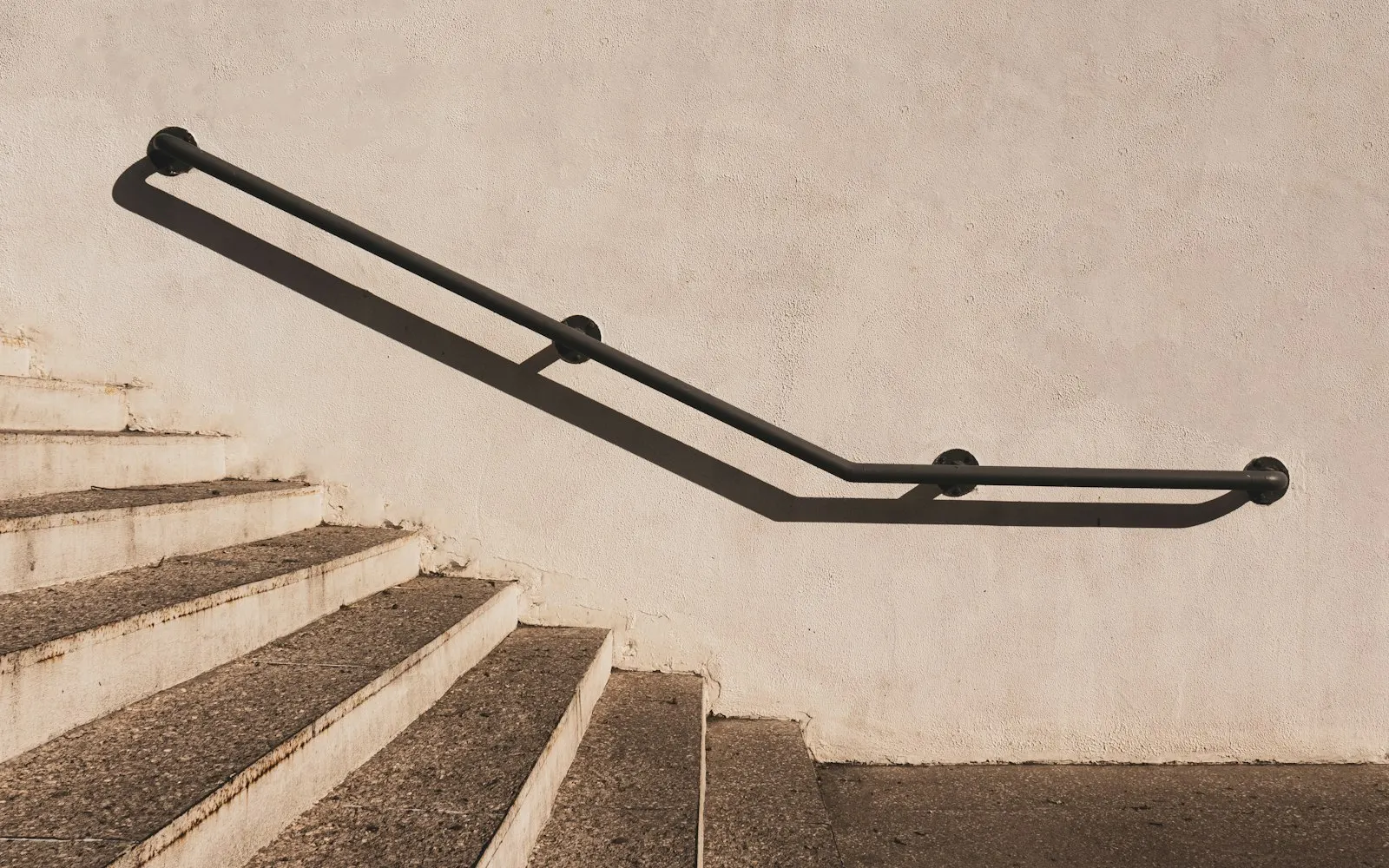
Handrails on both sides of steps provide the most support. External steps at front and back doors are common places for falls, particularly in wet weather. Rails should extend beyond the top and bottom step so the person has support before and after the change in level.
Hallways
Long hallways, particularly the path from bedroom to bathroom used at night, benefit from a continuous rail and a night light.
Funding: NDIS, Support at Home and other programs
Many people can access funding for home modifications. People with an NDIS plan may have funding for minor home modifications, often requiring an OT assessment and quotes. Older people can access home modifications through the Commonwealth Home Support Programme and Support at Home (which replaced Home Care Packages from late 2025), with assessments arranged through My Aged Care. Veterans may have support through DVA. Some local councils and community health services also provide home safety programs. We provide clear written quotes, invoices and photos that providers and plan managers need. We are not a registered NDIS provider, but self-managed and plan-managed NDIS participants can generally use unregistered providers; check with your plan manager.
Lever handles and easier homes
Round doorknobs and small cupboard knobs are hard to use for people with arthritis or limited grip strength. Lever handles on doors and D-shaped handles on cupboards make daily life easier. We replace door hardware throughout the house in one visit; see our door repairs and installation and kitchen and cupboard repairs pages.
Trip hazards and thresholds
Raised door thresholds, lifting carpet edges, loose mats, cracked paths and uneven steps are common trip hazards. We fit low-profile threshold ramps, re-fix loose carpet edges and transition strips, and repair or highlight uneven steps with contrasting non-slip nosings, which help people with reduced vision see the edge of each step. See our floor and skirting repairs page.
What we do not do
We do not carry out major structural modifications such as widening doorways, removing walls, building concrete ramps with permits, or converting bathrooms to step-free showers, which need a registered builder and sometimes a building permit. Plumbing changes, such as relocating taps, installing hand-held showers on new pipework or changing toilets, need a licensed plumber. Electrical work, such as new lighting, sensor lights or power points, needs a licensed electrician. We work alongside these trades, and can install rails and accessories once major work is complete.
Working with care and respect
Many of our customers for this service are older people living alone, people with disability, or families arranging work for a parent. We take time to explain what we are doing, work tidily and quietly, keep pathways clear while we work, and make sure everything is safe and cleaned up before we leave. Family members are welcome to be present, and we are happy to talk with a carer, OT or case manager on your behalf.
A home safety walk-through
When we visit to install a rail, we are happy to walk through the home with you and point out other common risks. Most are inexpensive and quick to fix:
Bathroom
Slippery tiles in the shower and on the floor, no rail to hold when stepping into the shower or bath, a low toilet that is hard to rise from, towel rails being used for support, and a door that opens inward, which can block access if someone falls against it.
Bedroom
A dark path from bed to door, loose rugs, cords crossing the floor, and a bed height that makes standing up difficult.
Living areas
Loose mats, low furniture that is easy to trip over, chairs without armrests, poor lighting and cluttered walkways.
Kitchen
Frequently used items stored too high or too low, requiring a step stool or deep bending.
Entrances and outside
Steps without handrails, uneven or cracked paths, slippery moss on paths and decks, poor outdoor lighting, and a front door threshold that catches walking frames.
We write down what we notice so you or your family can decide what to do, and we never pressure anyone into work they do not want.
Choosing grab rails
Materials
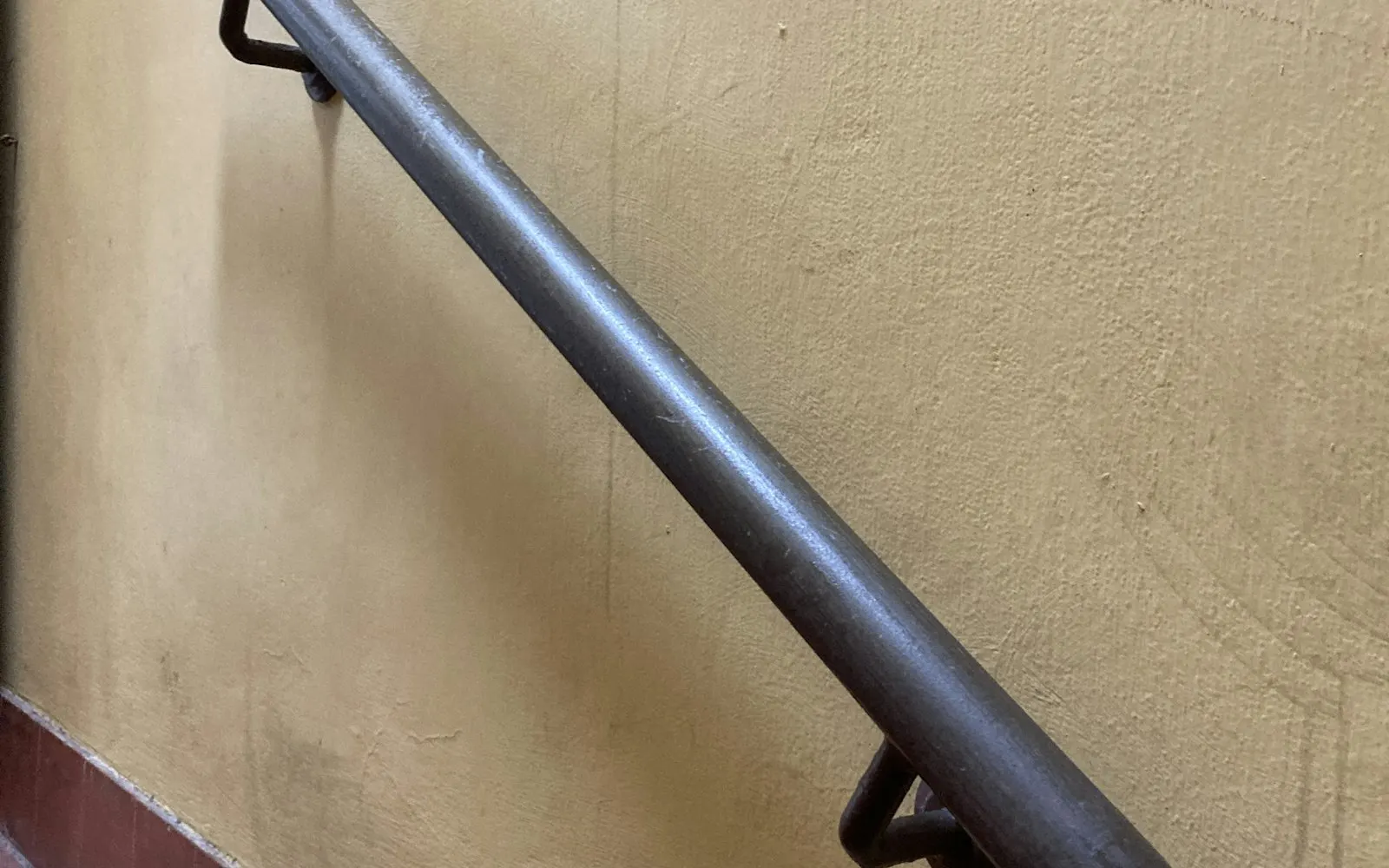
Stainless steel rails are durable, hygienic and suit wet areas. Powder-coated and nylon-coated rails feel warmer to the touch and give a better grip with wet hands. Contrasting colours help people with reduced vision see the rail clearly against the wall.
Shapes
Straight rails suit most positions. L-shaped and angled rails give both horizontal and vertical support beside toilets and in showers. Fold-down rails can be swung up out of the way when not needed, ideal beside toilets with no side wall.
Diameter and grip
Rails are commonly 25 to 40 millimetres in diameter, which suits most hands. Knurled or textured finishes improve grip in showers.
Temporary needs after surgery or injury
Hip and knee replacements, falls and other injuries often mean someone needs extra support for a few weeks or months. Rails installed for recovery often stay in place long-term because they turn out to be useful for everyone in the household. If a rail is only wanted temporarily, we can remove it later and patch the holes.
Rentals and units
Renters who need grab rails can request them as a modification. In Victoria, landlords must not unreasonably refuse consent for modifications needed for a renter with disability, and some safety modifications may be made without consent. Owners corporations may have rules for common property in unit blocks. We can provide a written description of the proposed work to help with these requests, and remove and patch at the end of the lease if required.
Every rail we fit is checked again before we leave, and we show the person using it how and where to hold it.
Areas we cover
We install grab rails and home safety modifications across our service areas, including Endeavour Hills, Noble Park, Dandenong North and Springvale.
Related services
Rail installation pairs with bathroom fixtures and accessories, silicone and caulking, floor and skirting repairs and door repairs and installation.
Frequently asked questions
Can grab rails be installed on plasterboard?
Grab rails must be fixed into solid structure such as studs, noggings, brick or concrete. Where studs are not in the right position, we fit a backing plate or use rated grab rail anchors.
Can you install rails specified by an occupational therapist?
Yes. We install rails to the type, position and height specified in an OT report.
Can NDIS or aged care funding pay for grab rails?
Often, yes. NDIS plans, Support at Home and the Commonwealth Home Support Programme can fund minor home modifications. We provide the written quotes and invoices providers need.
Are suction-cup grab rails safe?
They can come loose without warning and are not suitable as a primary support. Fixed rails are much safer.
Can you install a shower seat?
Yes, wall-mounted fold-down shower seats can be installed where the wall structure allows a secure fixing.
Can you help with outdoor steps?
Yes. We install handrails on external steps and fit non-slip nosings and threshold ramps.
Get a free quote
Send us your list of jobs, your suburb and a few photos. We will reply with a clear written scope and a free, no-obligation quote.
Get a free quote