
Most homes in the City of Greater Dandenong carry a running list of small faults. A cupboard door that drops a little more each month, a towel rail working loose from the plaster, a cracked tile at the back door, a gate latch that only catches if you lift it. None of them is urgent on its own, and that is exactly why they pile up. Our general home repairs service exists to clear that list properly in one organised visit, so you are not chasing three different trades for three small jobs.
We work across Dandenong, Noble Park, Springvale, Keysborough, Endeavour Hills, Doveton and the surrounding suburbs, and the housing stock here shapes the work. Post-war brick veneers, 1960s and 70s weatherboards, 1980s estates in Endeavour Hills, newer townhouse developments along the Princes Highway corridor and a growing number of units behind older homes all have their own typical faults. Knowing those patterns means we usually arrive with the right fixings, hinges, fillers and spare parts already in the van.
What counts as a general home repair
General repairs are the non-licensed fixes that keep a house working and looking cared for. If it involves timber, plaster, hardware, sealants, fixings or minor carpentry, it is almost certainly on our list. Typical jobs include:
- Re-hanging and adjusting internal doors that stick, swing open by themselves or will not latch
- Replacing worn door handles, privacy sets, door stops and hinges
- Patching holes in plasterboard left by old fittings, door handles or furniture knocks
- Re-fixing loose towel rails, toilet roll holders, curtain rods and blind brackets
- Replacing broken cupboard hinges, drawer runners and kitchen handles
- Re-securing loose skirting boards, architraves and quad moulding
- Fixing sagging gates, broken latches and loose fence palings
- Re-siliconing around baths, basins, kitchen sinks and benchtops
- Replacing cracked or drummy individual tiles and regrouting small areas
- Adjusting sliding wardrobe doors and replacing worn wheels or guides
- Installing door snakes, weather seals and draught strips
- Replacing torn flyscreen mesh and broken window winders
We do not touch licensed electrical or plumbing work. If a repair turns out to need a licensed electrician or plumber, we will say so plainly rather than attempt it, and we can describe the issue clearly so the right trade knows what they are walking into.
Why a list approach works better
The most efficient way to use a handyman is to batch the jobs. When you send us the whole list up front, we can plan materials, work out the order of tasks and complete the lot in a single visit instead of returning for each one. Patching and painting a wall is a good example: the filler needs time to set before sanding, so we start the patch first, move on to the door adjustments and cupboard hinges, and come back to sand and paint once it has cured. Done in that sequence, half a day of work does not stretch into three separate appointments.
We suggest walking through the house room by room with your phone. Photograph each fault, jot a one-line note, and send the lot through the quote form. Photos tell us far more than a description. A picture of a drooping cupboard door shows whether the hinge is broken, the screws have pulled out of chipboard, or the whole carcass has swelled from a leak. Each of those needs a different fix.
Common faults we see in south-east Melbourne homes
Swollen chipboard in kitchens and bathrooms
Many kitchens and vanities installed from the 1980s through the early 2000s used chipboard carcasses. Once water gets in, usually from a slow drip under the sink or a failed seal around the basin, the board swells and hinge screws lose their grip. Simply re-screwing in the same holes rarely lasts. We either relocate the hinge, use a hinge repair plate, or replace the affected panel if the swelling is severe, and we check for the source of the moisture so the problem does not return.
Movement cracks in brick veneer homes
The reactive clay soils across much of Dandenong, Noble Park and Keysborough expand in wet winters and shrink through dry summers. That seasonal movement shows up as hairline cracks at cornice joints, above door frames and where walls meet ceilings. Most are cosmetic. We rake them out, fill with a flexible compound where appropriate, sand and paint so the repair moves with the house instead of cracking again by the next summer. Wide cracks, stepped cracks in brickwork or doors that suddenly jam after years of working fine can indicate something more significant, and we will recommend a structural assessment if we see those signs.
Worn hardware in older homes
Original door furniture in 1960s and 70s homes is often worn beyond adjustment. Latches stick, spindles slip and privacy locks fail at the worst moments. Replacing hardware is quick, and matching the style across the house makes a noticeable difference to how the place feels. We can supply hardware or fit what you have already bought.
Wear and tear in rentals
Greater Dandenong has a high proportion of rental properties. Between tenancies, the same items come up again and again: holes from picture hooks, scuffed walls, damaged flyscreens, loose handles and broken blind cords. We cover this in detail on our end-of-lease and rental repairs page.
How a general repairs visit runs
1. You send your list and photos through the free quote form.
2. We review it, ask any questions and confirm what is in scope, including anything that needs a licensed trade instead.
3. We provide a written quote covering the agreed jobs, with no surprises added on the day.
4. On the day we arrive with the materials, protect floors where needed, and work through the list in a sensible order.
5. Before leaving, we walk you through each completed job, clean up, and take away our offcuts and packaging.
If something unexpected turns up mid-job, such as rot behind a skirting board or a hidden leak under a vanity, we stop, show you, and agree on next steps before doing anything extra.
Materials and finishes we use
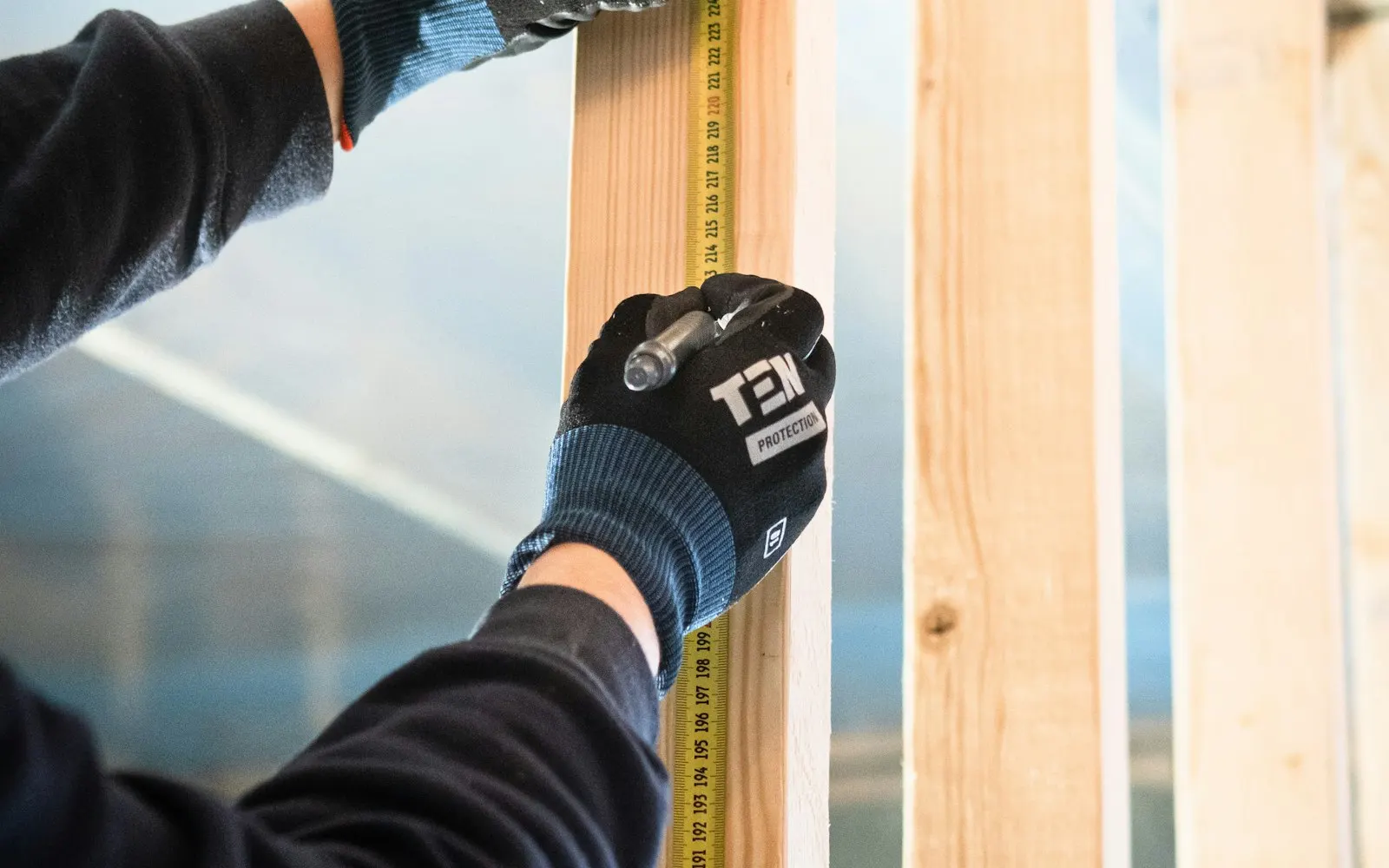
Quality of materials matters more on small repairs than people expect, because cheap fillers shrink, cheap hinges sag and cheap silicone goes mouldy within a year. We use mould-resistant sanitary silicone in wet areas, lightweight setting compounds for deeper patches, top-coat compounds for a smooth finish, stainless or zinc-plated screws suited to the location, and quality hinges and runners from established Australian suppliers. Where a repair is visible, we take the time to match paint sheen and texture so the fix disappears rather than standing out as a shiny square on a matte wall.
Repairs for owners, renters and landlords
Homeowners usually call us to clear the list before family visits, before a sale or simply because they are tired of looking at the same faults. Renters call us, with their landlord’s permission, to fix damage before handing back keys. Landlords and property managers use us to keep properties in good order between inspections. Each group has slightly different needs around documentation and timing, and we are happy to provide photos of completed work for condition reports. See our property managers page for how we work with agencies.
When to call a handyman versus doing it yourself
Plenty of small fixes are fine to DIY, and we would rather you save the visit if a screwdriver will do. Tightening a loose handle, replacing a door stop or re-fixing a toilet roll holder into a stud is straightforward. Where a handyman earns their keep is the job that looks simple but is not: patching plaster so the repair is invisible under paint, re-hanging a door so it closes evenly along the whole frame, fixing into hollow walls so a heavy mirror stays put, or replacing a cracked tile without damaging its neighbours. Those jobs rely on technique and the right tools, and a poor first attempt often makes the professional fix harder.
Safety and care in your home
We treat your home the way we would want ours treated. Drop sheets go down before dust is created, we vacuum as we go, shoes stay clean on carpet, and power tools are used with extraction where practical. In homes built before 1990 we take care when sanding or drilling older painted surfaces and sheeting, and if we suspect asbestos-containing material in an older eave, wall sheet or vinyl floor we stop and recommend testing before any cutting or drilling.
Related services
General repairs often lead into more specific work. You might also need door repairs and installation, plaster and wall patching, painting touch-ups or silicone and caulking. If your list is mostly outdoors, look at fence repairs and gates and deck and pergola repairs.
We cover every suburb listed in our service areas, including Dandenong, Noble Park and Endeavour Hills.
Get your list sorted
Send us your list with a few photos and we will come back with a clear, itemised quote. The more detail you give us, the more accurately we can plan the visit and the fewer surprises there are on the day. There is no charge for quoting and no obligation to go ahead.
Frequently asked questions
How many jobs can you fit into one visit?
It depends on the jobs, but a typical half-day visit clears eight to fifteen small repairs if the list is sent in advance with photos so we can bring the right parts. We will tell you up front if the list needs a full day or a second visit.
Do you supply the materials and hardware?
Yes. We bring common fixings, fillers, sealants, hinges and hardware, and we can source specific items such as matching door handles. If you have already bought fittings, we are happy to install those instead.
Can you do electrical or plumbing repairs?
No. We only take on non-licensed work. If a repair involves wiring, power points, light fittings, taps or pipework, you will need a licensed electrician or plumber, and we will tell you so rather than attempt it.
Do I need to be home during the repairs?
Not necessarily. Many clients leave a key or code, especially landlords and property managers. We send photos of the completed jobs so you can see the results without being there.
What if you find a bigger problem while working?
We stop and show you before doing anything outside the agreed scope. Hidden rot, leaks or signs of structural movement are explained clearly, with options, so you decide what happens next.
How do I get a quote for general repairs?
Use the free quote form and include a list of jobs with photos. We review it and reply with a written, itemised quote. Quotes are free and there is no obligation.
Get a free quote
Send us your list of jobs, your suburb and a few photos. We will reply with a clear written scope and a free, no-obligation quote.
Get a free quote